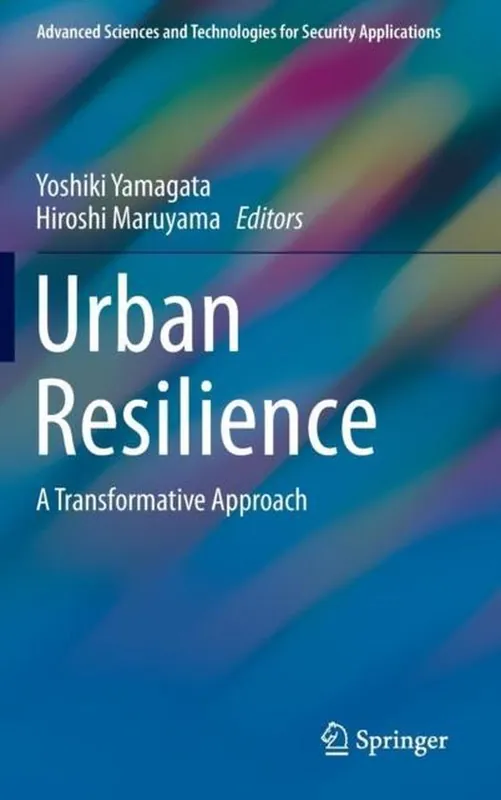

Titel: Urban Resilience
Bindingswijze: Hardcover
EAN: 9783319398105
Conditie: Goed
Staat van dit boek
Elk boek is handmatig gecontroleerd. Vragen? Stuur gerust een bericht.
Condities
Als nieuw Zo goed als nieuw, geen tot vrijwel geen gebruikssporen.
Goed Lichte gebruikssporen mogelijk, meestal geen aantekeningen.
Redelijk Zichtbaar gebruikt, kan sporen of aantekeningen bevatten.
Nieuw Ongelezen en in nieuwe staat.
Beschrijving:
The book systematically deals with the core aspects of urban resilience: systems, management issues and populations.
The taxonomy can be broken down into threats, systems, resilience cycles and recovery types in the context of urban resilience.
This book is on urban resilience – how to design and operate cities that can withstand major threats such as natural disasters and economic downturns and how to recover from them. It is a collection of latest research results from two separate but collaborating research groups, namely, researchers in urban design and those on general resilience theory. The book systematically deals with the core aspects of urban resilience: systems, management issues and populations.
The taxonomy can be broken down into threats, systems, resilience cycles and recovery types in the context of urban resilience. It starts with a discussion of systems resilience models, focusing on the central idea that resilience is a moving average of costs (a set of trajectories in a two-player game paradigm). The second section explores management issues, including planning, operating and emergency response in cities with specific examples such as land-use planning and carbon-neutral scenarios for urban planning. The next section focuses on urban dwellers and specific people-related issues in the context of resilience. Agent-based simulation of behaviour and perception-based resilience, as well as brand crisis management are representative examples of the topics discussed. A further section examines systems like public utilities – including managing power supplies, cyber-security issues and models for pandemics. It concludes with a discussion of the future challenges and risks facing complex systems, for example in resilient power grids, making it essential reading for a wide range of researchers and policymakers.
This book is on urban resilience – how to design and operate cities that can withstand major threats such as natural disasters and economic downturns and how to recover from them. It is a collection of latest research results from two separate but collaborating research groups, namely, researchers in urban design and those on general resilience theory. The book systematically deals with the core aspects of urban resilience: systems, management issues and populations.
The taxonomy can be broken down into threats, systems, resilience cycles and recovery types in the context of urban resilience. It starts with a discussion of systems resilience models, focusing on the central idea that resilience is a moving average of costs (a set of trajectories in a two-player game paradigm). The second section explores management issues, including planning, operating and emergency response in cities with specific examples such as land-use planning and carbon-neutral scenarios for urban planning. The next section focuses on urban dwellers and specific people-related issues in the context of resilience. Agent-based simulation of behaviour and perception-based resilience, as well as brand crisis management are representative examples of the topics discussed. A further section examines systems like public utilities – including managing power supplies, cyber-security issues and models for pandemics. It concludes with a discussion of the future challenges and risks facing complex systems, for example in resilient power grids, making it essential reading for a wide range of researchers and policymakers.