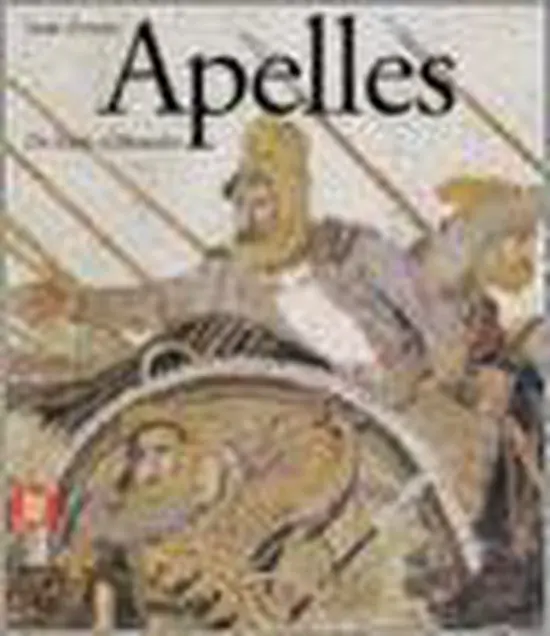

Titel: Apelles
Schrijver: Paolo Moreno
Bindingswijze: Hardcover
EAN: 9788881188642
Conditie: Goed
Staat van dit boek
Elk boek is handmatig gecontroleerd. Vragen? Stuur gerust een bericht.
Condities
Als nieuw Zo goed als nieuw, geen tot vrijwel geen gebruikssporen.
Goed Lichte gebruikssporen mogelijk, meestal geen aantekeningen.
Redelijk Zichtbaar gebruikt, kan sporen of aantekeningen bevatten.
Nieuw Ongelezen en in nieuwe staat.
Beschrijving:
When Neapolitans speak of ’the museum’ they are referring to the Museo Archeologico Nazionale. Among the marvels that make it the world’s greatest collection of classical art, the Alexander mosaic was, from the moment it was brought to the museum in 1843, the ‘great mosaic.’ Although it is evident that the Pompeian mosaic reproduces a painting, since it was discovered in the House of the Faun on 24 October 1831 the identity of the original has been the subject of an intense debate among scholars. On being shown a drawing of the mosaic, Goethe wrote, ‘The present and the future will not succeed in commenting correctly on this artistic marvel, and we must always return, after having studied and explained it, to simple, pure wonder.’ Two centuries of archaeological inquiry have not exhausted the profundity of the picture and have not given wholly satisfactory replies to the principal questions regarding it, namely, which episode is being represented here, whether the painting was executed during Alexander’s reign or later, and to whom it should be attributed. A new series of photographs– allowing the most important aspects of the scene to be shown in vivid detail– facilitates the expounding of a hypothesis that until recently would have seemed improbable, but is justified by a close examination of the literary sources and archaeological finds, as well as by unexpected evidence in the original paintings that have come to light in Macedonia: the attribution to Apelles, the most famous painter of antiquity, whose revolutionary impact is fully described in this fascinating account.